B.Sc. Engineering Thesis • Wrocław University of Science and Technology (2025 – 2026)
B.SC. THESIS PROJECT
Adaptive Moving Target Defense (MTD) in Containerized Environments
Designed and implemented an autonomous, SIEM-driven Moving Target Defense testbed that eliminates static infrastructure predictability. By closing the OODA loop between Splunk Enterprise telemetry and a host-isolated Python/Docker controller, the system detects application attacks (SQLi, RCE, Brute-Force), seamlessly migrates legitimate traffic across twin stateless containers, and wipes compromised OverlayFS layers without dropping active user sessions.
277 ms
Avg Nginx SIGHUP Proxy Switch
0 / 32,414
HTTP 502/504 Gateway Errors
100.0%
Redis Session Continuity (300 migrations)
38.8 s
Mean Attacker Dwell Time (100% wipe)
Key Architectural Highlights
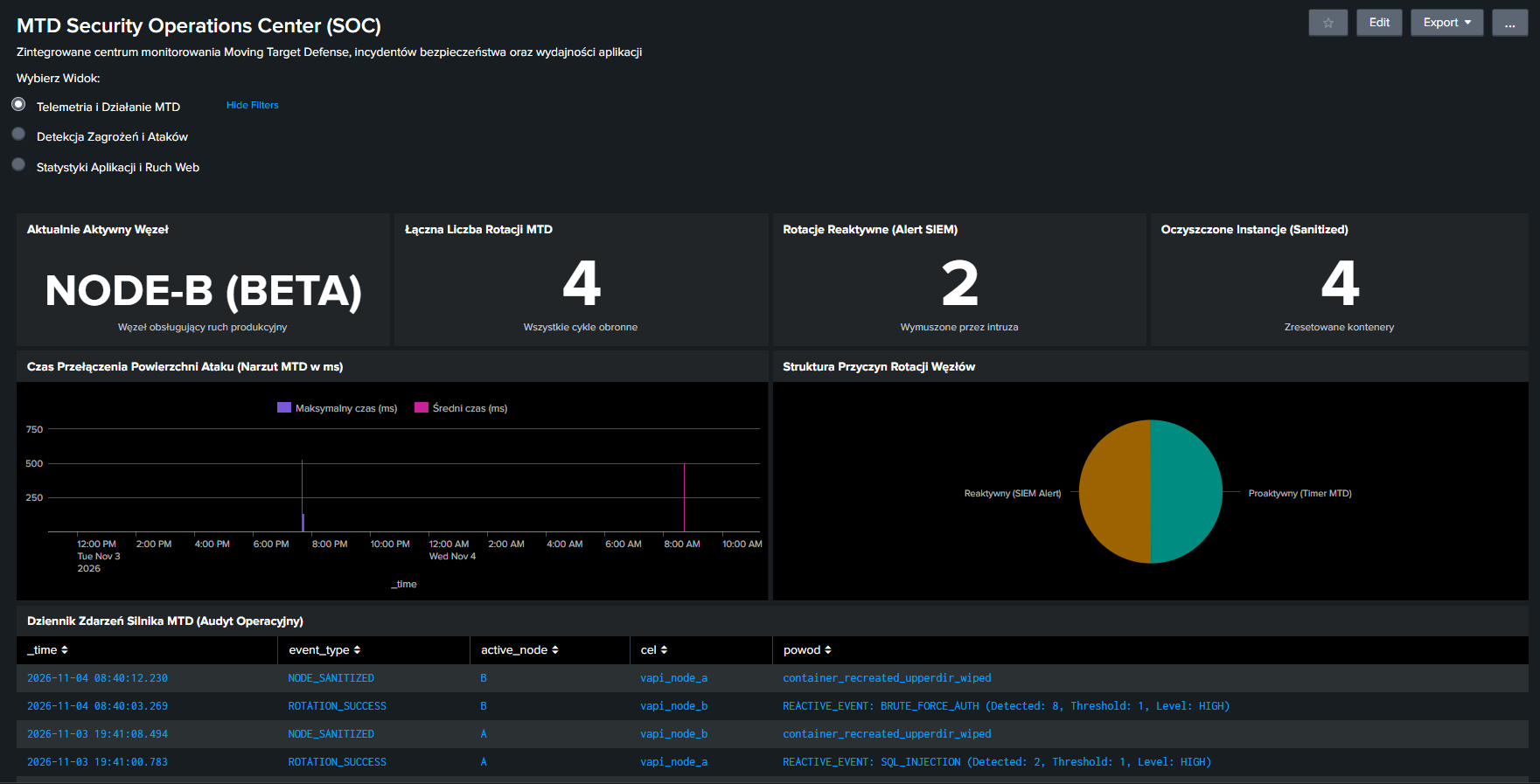
- Closed-Loop OODA Automation: Custom SPL correlation rules in Splunk Enterprise detect SQLi, Command Injection, and HTTP 401 Brute-Force anomalies, triggering JSON webhooks to the MTD controller.
- Zero-Downtime Traffic Shifting: Active-Passive upstream switching via Nginx graceful worker reload (
SIGHUP) paired with a 3-second grace period beforeSIGKILL+--force-recreatecontainer reincarnation. - Stateless Compute & Session Persistence: Followed Twelve-Factor App principles by decoupling session UUIDs into external Redis (
SETEX) and persistent records into PostgreSQL 15, ensuringupperdirwipes destroy attacker webshells/backdoors while preserving user logins. - Control Plane Isolation: Isolated
mtd_engine.pyand/var/run/docker.sockon the host OS outside container namespaces, mounting Nginx logs read-only (:ro) into Splunk to prevent log tampering. - Custom Splunk SOC Dashboard: Built a multi-tab Simple XML operational dashboard tracking switch latency (ms), reactive vs. proactive rotations, attack payloads, and node load distribution.
System Topology (mtd_bridge_net)
 Click to enlarge
Python 3.11
Docker & Compose
Docker SDK
Splunk Enterprise (SPL)
Nginx Reverse Proxy
Flask
Redis
PostgreSQL 15
OverlayFS
Bash